Unlock the Power of Talent: Putting People Where They Thrive
True organizational performance is achieved when you balance what you control with what your people choose.
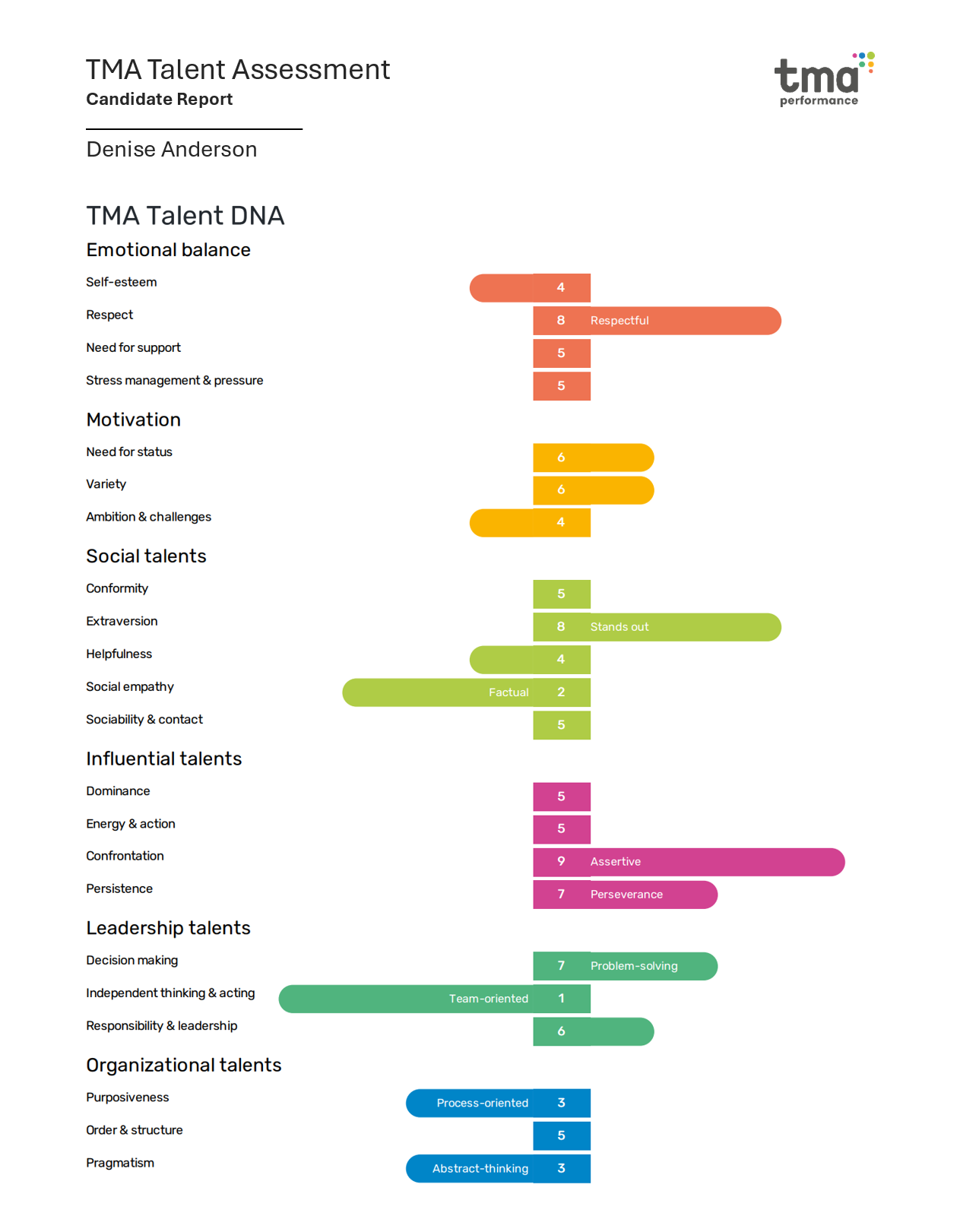
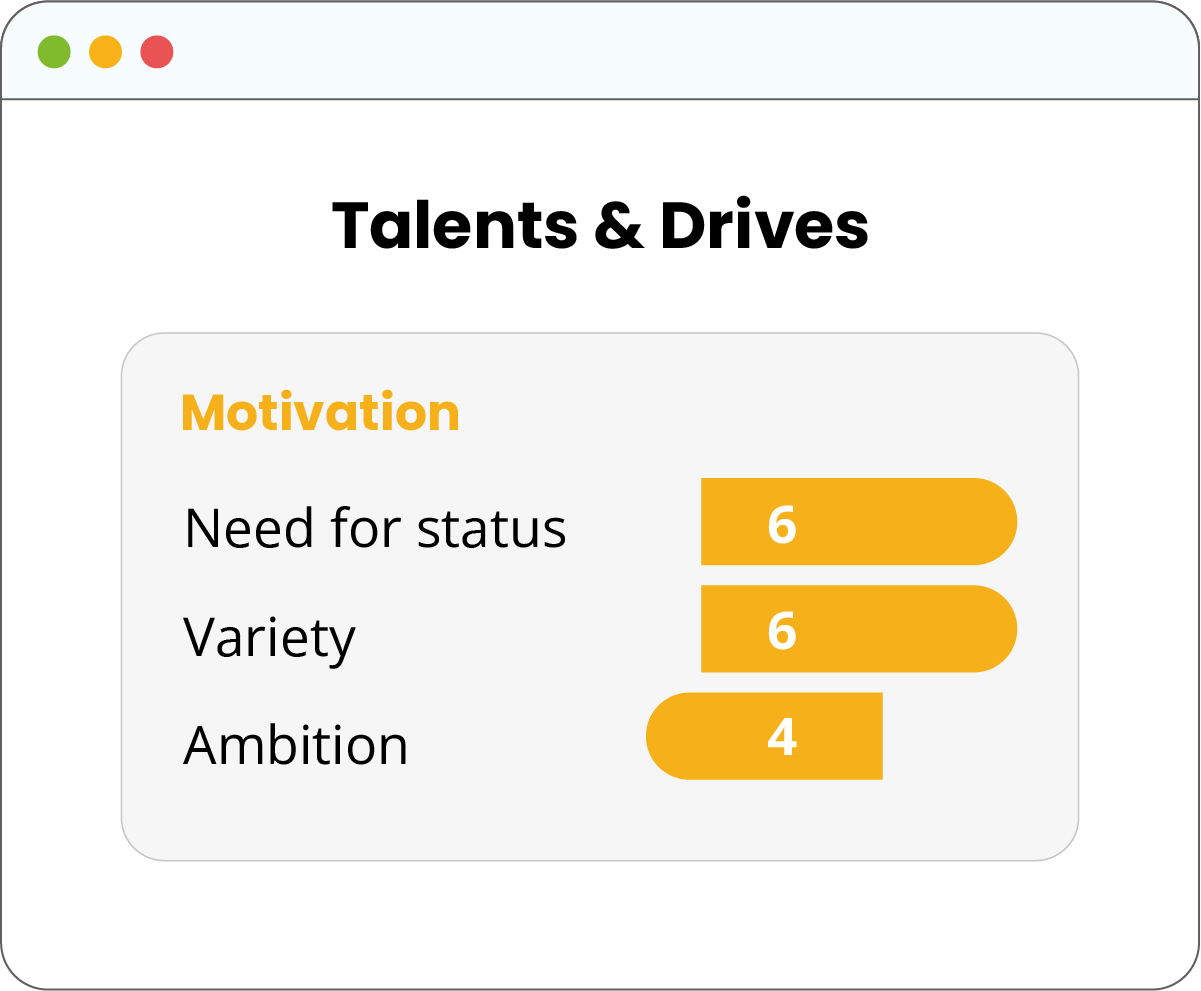
The TMA Talent Assessment measures 22 drives to determine an individual’s natural talents and to predict job fit and long-term potential. By aligning talents with role expectations, it minimizes burnout while boosting engagement. This scientifically grounded tool helps organizations select talent, develop individuals, and position employees where they naturally excel to drive overall performance.




Our Talent Philosophy
Every employee brings three critical dimensions to their work:
Preferred Behavior (What Comes Naturally)
These are an individual’s inborn strengths, natural tendencies, and behavioral preferences. When work aligns with what someone naturally enjoys and does well, performance accelerates and engagement rises. Roles built around an employee’s natural talents lead to long‑term success, lower burnout, and higher satisfaction.
Displayed Behavior (What They Actually Do)
Displayed behavior represents the skills, habits, and actions an employee demonstrates every day. This is where true value is created—through observable behaviors that drive outcomes.
Desired Behavior (What the Organization Needs)
Every role has expectations—competencies, skills, and standards that define success. Without clarity here, employees feel lost or frustrated.
Where Talent Meets Opportunity
Maximum performance happens where these three lenses overlap—where what a person can do, should do, and loves to do come together.
Our talent assessments and tools help organizations:
• Identify natural strengths and preferences for every employee
• Predict job fit and future potential with scientific accuracy
• Clarify expectations and competencies for every role
• Build career pathways aligned with personal and organizational goals
• Reduce burnout by avoiding misalignment between people and roles
• Increase engagement by placing employees where they can thrive